June 2, 2026
An accessory dwelling unit is often the highest-return construction available on a lot you already own — provided the basics stack up before you spend on design.
Accessory dwelling units have become one of the most common projects we are asked about in Los Angeles, and for good reason: you already own the land, which is usually the expensive part.
That said, the projects that go smoothly tend to be the ones where a handful of questions were answered honestly at the start rather than discovered halfway through.
1. What is the site actually like?
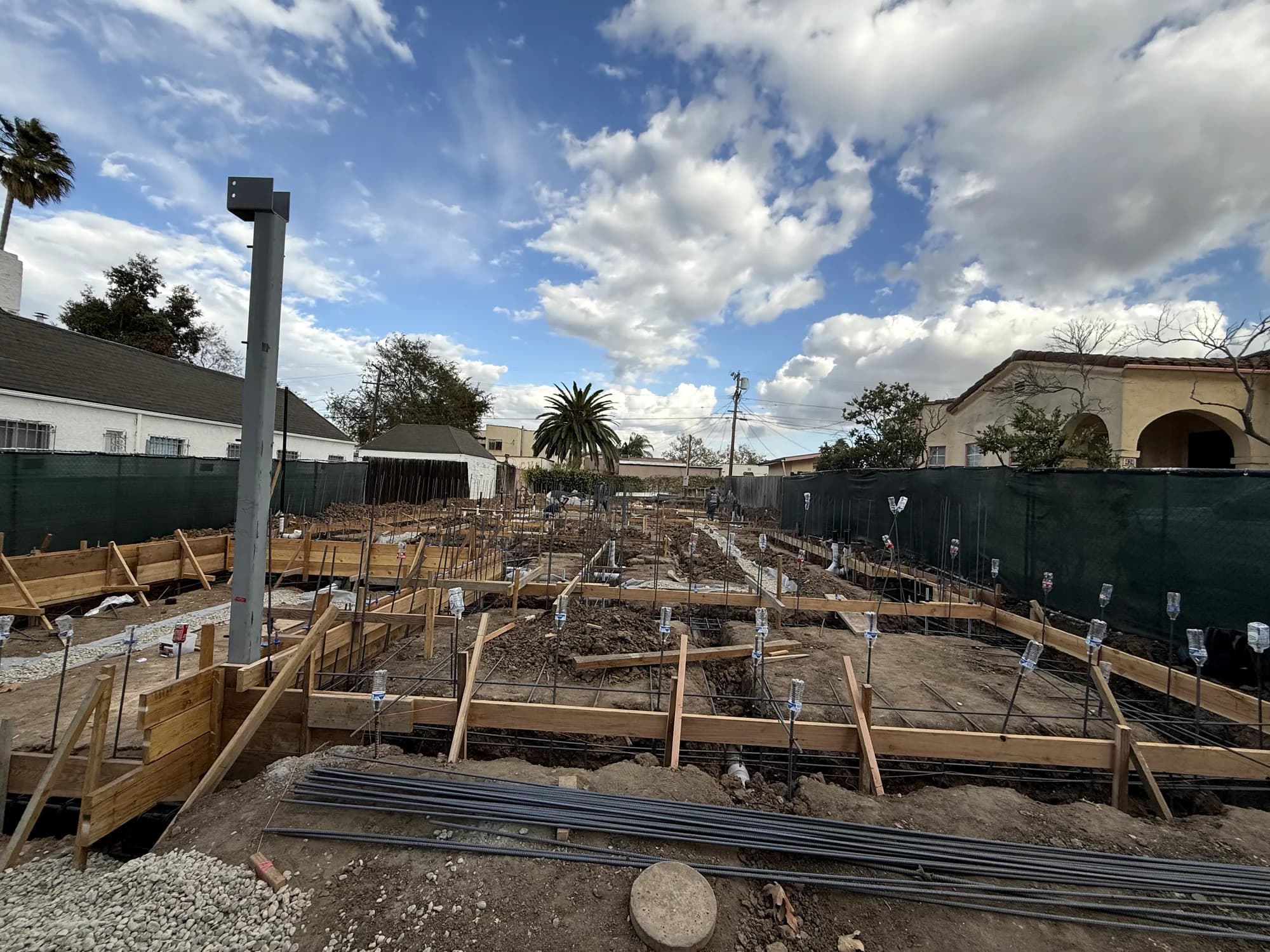
Slope, access, soil and existing structures drive cost more than square footage does. A flat lot with a wide side return is a very different project from a hillside with no vehicle access, even at identical floor area.
2. Where do the services come from?
Water, sewer, power and gas all have to reach the new unit. The distance and route from existing connections is one of the most common sources of unexpected cost, and it is knowable early.
3. What are you optimising for?
A unit built to rent, a unit built for a family member and a unit built to raise resale value are three different briefs. They justify different specifications, and being clear about which one you are doing prevents a lot of expensive indecision later.
4. Have you priced it before you designed it?
It is worth getting a realistic construction number against a sketch before commissioning full drawings. Designing first and pricing second is how people end up paying twice for the same design.
5. Who is carrying the approvals?
Rules and timelines vary by jurisdiction and change over time, so it is worth confirming who is responsible for getting the drawings through approvals, and what happens to your programme if that takes longer than hoped.
Written by the team at APW Builders — a family-operated general contractor in North Hollywood, building across greater Los Angeles since 1992.